Showing posts with label grow light. Show all posts

Wednesday, September 16, 2020

5 Delicious Recipes You Can Make with Your Home Garden


Healthy Garden Vegetable Recipes

From garden to table, recipes are easier than you think. 
Now that many of us are spending more time at home, we have more opportunities to grow our home gardens. Put your garden to work and organically grow your own fruits and vegetables outside or in your apartment.  Use a high-quality grow-light or grow tent to maximize indoor growth.
Home Garden Recipies 
home garden

Sesame-Ginger Cucumber Salad 

  • 2 tablespoons rice vinegar
  • 5 teaspoons soy sauce
  • 2 tablespoon olive oil
  • 2 teaspoons minced fresh ginger root
  • 2 teaspoons sesame oil
  • 2 teaspoon honey
  • 1/4 teaspoon Sriracha chili sauce
  • 1-3 cucumbers
  • 1 teaspoon sesame seeds, toasted
  • Chopped green onions

Directions:

  1. Simply mix all the liquid ingredients together and trim the ends of the cucumbers before you cut into strips. Toss the salad and sprinkle with green onions and sesame seeds for taste. 
organic home cooking


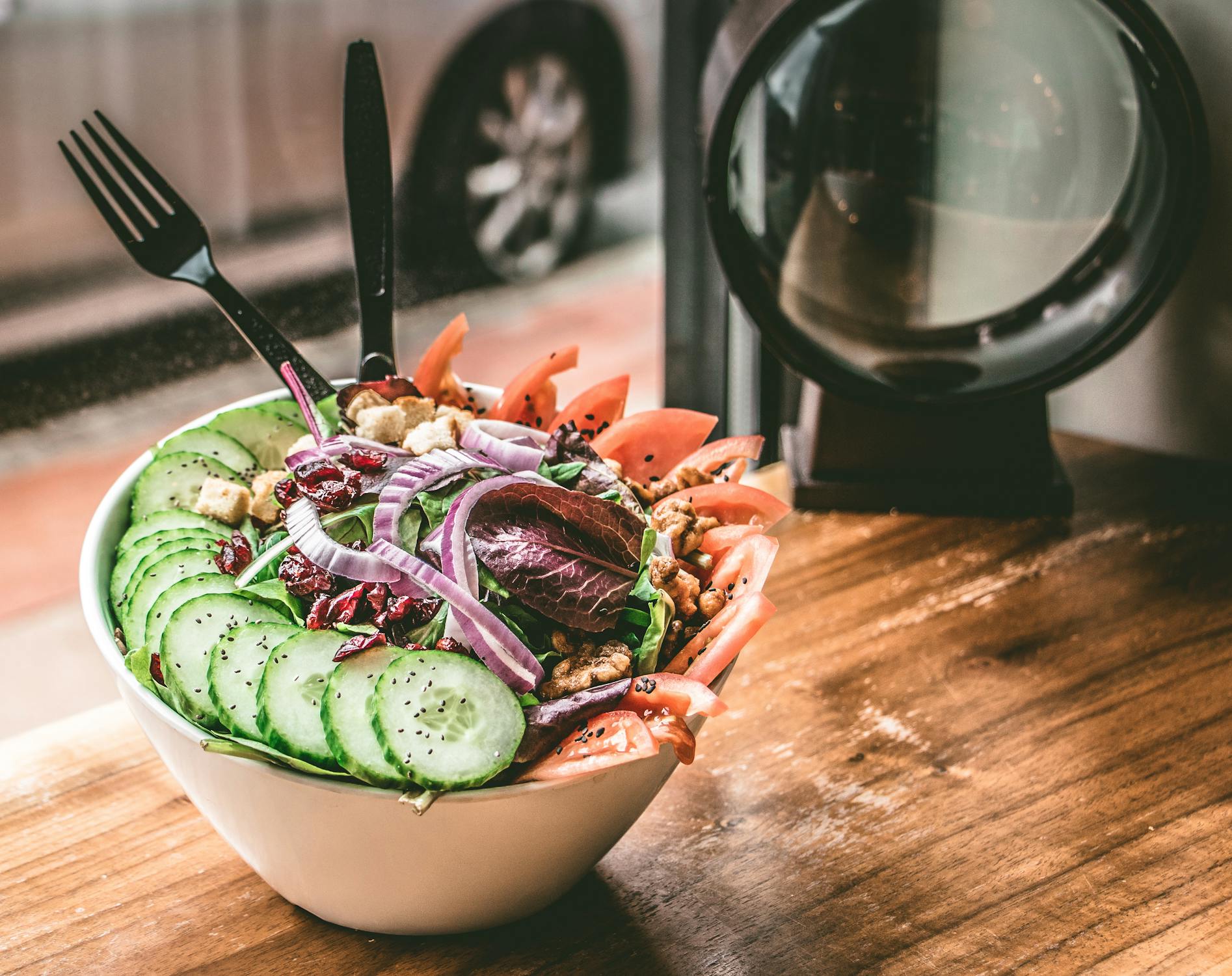
Balsamic Cucumber Salad 

  • 1 large English cucumber, halved and sliced
  • 2 cups grape tomatoes, halved
  • 1 medium red onion, halved and thinly sliced
  • 1/2 cup balsamic vinaigrette
  • 3/4 cup crumbled reduced-fat feta cheese
  • Olives for flavor 

Directions:

  1. Take a large bowl and add the sliced cucumber, tomatoes, and onion
  2. Add the vinaigrette and toss lightly to mix 
  3. Chill and sprinkle cheese before serving 
kale salad organic home


Strawberry Kale Salad 

  • 1/2 cup olive oil
  • 1/3 cup cider vinegar
  • 1 teaspoon honey
  • 1/4 teaspoon salt
  • 1/8 teaspoon pepper
  • 1 bunch kale (about 12 ounces), trimmed and chopped (about 14 cups)
  • 2 cups sliced fresh strawberries
  • 3/4 pound bacon strips, cooked and crumbled
  • 1/4 cup minced fresh mint
  • 1 cup crumbled feta cheese
  • 1/4 cup slivered almonds, toasted

Directions:

  1. In a large bowl, mix the olive oil, vinegar, honey, salt, pepper until the dressing is smooth 
  2. Toss the kale, strawberries, bacon, and mint with the dressing. 
  3. Add cheese and almonds before serving

Garden-Fresh Rainbow Chard 

  • 2 tablespoons olive oil
  • 1 medium red onion, halved and sliced
  • 3 garlic cloves, sliced
  • 1/4 cup chicken broth
  • 2 bunches rainbow Swiss chard, coarsely chopped (about 16 cups)
  • 2 tablespoons lemon juice
  • 1/4 teaspoon salt
  • 1/4 teaspoon pepper

Crunchy Lemon-Pesto Garden Salad 

  • 5 tablespoons prepared pesto
  • 1 tablespoon lemon juice
  • 2 teaspoons grated lemon zest
  • 1-1/2 teaspoons Dijon mustard
  • 1/4 teaspoon garlic salt
  • 1/4 teaspoon pepper
  • 2-1/2 cups thinly sliced yellow summer squash
  • 1-3/4 cups thinly sliced mini cucumbers
  • 3/4 cup fresh peas
  • 1/2 cup shredded Parmesan cheese
  • 1/4 cup thinly sliced green onions
  • 5 thick-sliced bacon strips, cooked and crumbled

Directions:

  1. Mix your pesto, lemon juice, grated lemon zest, dijon mustard, garlic salt, and pepper. 
  2. In your second bowl add squash, cucumber, peas, Parmesan, and green onion. 
  3. Add bacon and salad dressing 


Friday, March 17, 2017

Do Grow lights really work? And How to choose the Best Light for Indoor Growing?

Do grow lights really work? Yes!!! All plants need the light. But do you know how to choose a grow light for your plant? Now, let us keep it simple.

Mostly, there are High pressure sodium(HPS) lamp, Metal Halide(MH) lamp, LED light on the market.

The wavelength and effect of plants growing light
1. The color temperature and lumen
The color temperature and lumen are seen by human eyes with no effect on the photosynthesis of plants. Yes, you can ignore these two parameters.
2. The influence of spectrum to plants physiology
280 - 315nm -- minimal influence to the shape and physiology
315 - 400nm -- absorb tiny chlorophyll, affect the photoperiodic effect and prevent the stem growing.
400 - 520nm (Blue) -- absorb maximum chlorophyll and carotene and affect most to the photosynthesis. It suits for promoting plant growth.
520 - 610nm -- absorb pigment in low ratio
610 - 720nm (Red) -- absorb chlorophyll in low ratio and significantly affect the photosynthesis and photoperiodic effect. It makes flower and bear fruit well.

*Based on the above theory, plant growing lights are usually full blue, full red or red-blue-combination to cover the wavelength range that photosynthesis needs. Red-blue-combination light appears pink color in visual.

*Now, I think you have knew how to choose a grow light. Let's put it all together.
Spectrum is the most important parameter. Want your plants growing up, choose BLUE LIGHT; Want them flower and fruit, choose RED LIGHT.
The appropriate spectrum proportion of red and blue light is between 5:1 to 10:1, usually 7~8:1. It would be the best to adjust the proportion according to the plants growing period needs if possible.

The difference between HPS, MH and LED lights.
1. Energy
It is directly related to your electric bill. LED light costs about 1/4 energy consumption of HPS and MH lamp. As for the same wattage, LED light can save 30-40% electricity charge compared to HPS and MH lamp.
2. Application
The working temperature of HPS and MH Lights is pretty high that they would burn out the plant if too close as well as significantly affecting the room temperature if too many. So HPS and MH lights are apply for greenhouse, not for multilayer cultivating rack & seedling stage.

The grow light below 50W is suitable to close to plants, should be 20 - 40 inch height to the plant canopy when applied. Such as plant tissue culture, layered planting, floriculture at home, small space soilless culture. By the way it is good response at seedling stage. Light over 50W is used for greenhouse environment. The best distance between light & plant canopy (most plants) is about 100 inch.

Now I think you should have an idea why blue & red LED grow lights are the best seller, and how to choose the right grow light for your indoor growing.